
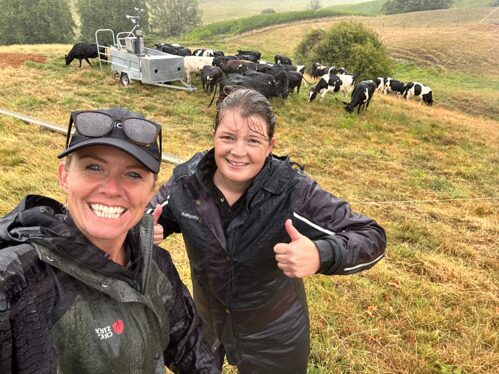
Part 1: Nature does not read our protocols!!
One of the difficult truths about production animal research is that the biggest variable in your study may not be the treatment.
It may be spring.
Or rain.
Or pasture quality.
Or the fact that half your cows calved two weeks later than expected because biology did not check the project timeline.
Some examples of studies where these variables really did add to the challenge of the study for us:
- While researching a bolus given to cows just after they calve. This trial was meant to take 2-3 weeks, it took more than 2 months, because the cows just decided not to calve to their calving dates.
- When completing a methane reduction product study with greenfeed machines and feed troughs in New Zealand Autumn conditions, the rain and hail came!!! The paddocks became a mud pool around the troughs and machines, we got stuck, the machines we hard to move, the cows made one MASSIVE mess!!
- Just when we were about to start a study in Northern NSW, it flooded!! We could not get to the farm to start!
- When setting up a study to look at a product and how it reduced faecal egg counts. The season was unusual, and the lambs had almost no parasite eggs!
- When working with 6000 lambs being tailed/docked on a large South Island station within 3-4 days, they did not have time to slow down. We needed to flex and provide the maximum number of staff to keep the pace and the research quality.
As researchers, we like tidy plans, protocols, enrolment targets, sampling schedules and neat little tables that say what should happen on each day of the study. These things matter. A lot. But anyone who has worked with production animals knows the real world has a habit of barging in.
This is especially true in seasonal systems like in the Southern Hemisphere.
In New Zealand and Australia, many dairy herds calve in a tight spring window. That is incredibly useful for research because large numbers of animals move through the same biological stage at roughly the same time so product development can be FAST!! But it also means timing matters a lot!
This is the same for cattle and sheep.
For example: We have about a 3–4-month window to find the majority of the mastitis cases in Spring calving herds for clinical mastitis product development. We have a 2-month window for metabolic disease.
Lamb growth, parasite challenge, ewe body condition and pasture availability can all shift rapidly across a season. A study run in a kind spring may tell a different story from one run in a cold, wet, miserable one. Same product. Same protocol. Different world.
Production animal research is not laboratory research with bigger animals and muddier boots. It is research inside a living farming system. The animals are changing. The feed is changing. The weather is changing. The farmers are making decisions in response to all of it.
This does not mean field research is too messy to be useful. Quite the opposite. The mess is often the point.
Farmers, particularly in the Southern Hemisphere do not use products in controlled conditions. They use them in paddocks, yards, sheds and raceways. They use them when the weather is inconvenient, when feed quality varies, when labour is stretched and when animals are behaving like animals. If a product only works when everything is perfectly controlled, that is useful to know.
We think good study design does not eliminate reality. It makes room for it.
Over the years, I have become less interested in pretending variability is the enemy. It really does tell us how the product works across real conditions and of course makes for a great challenge for the team to navigate!